FOOD IS CLIMATE
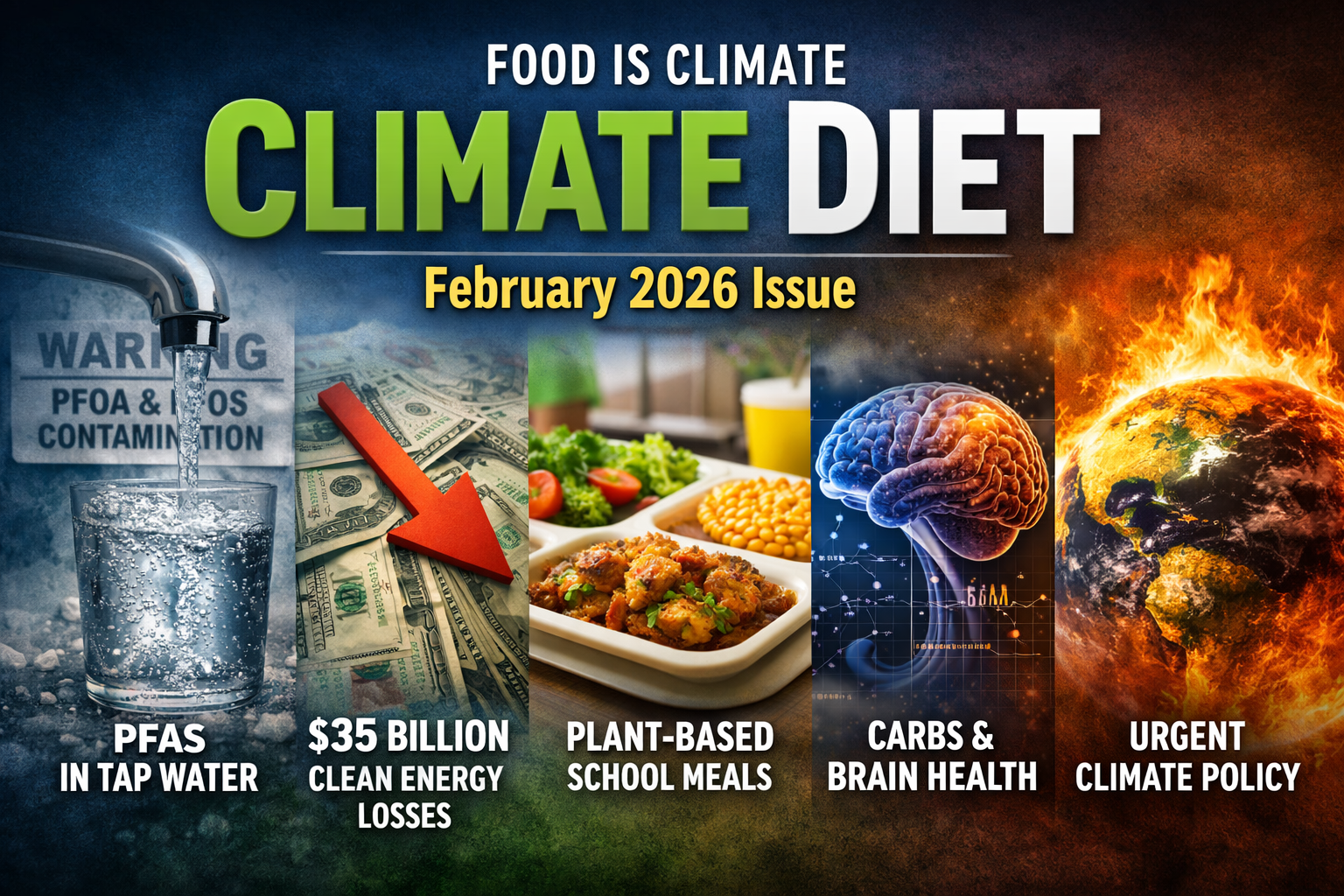
Nearly Half of Water Samples Contain PFAS

Per- and polyfluoroalkyl substances (PFAS), often called “forever chemicals,” are now showing up in nearly half of U.S. drinking water samples. These synthetic compounds, used in cookware, food packaging, stain-resistant fabrics, and industrial applications, persist in the environment and accumulate in human bodies.
A University of Southern California study analyzing cancer data from 2016–2021 found communities with PFAS-contaminated water faced up to a 33% higher incidence of certain cancers. Researchers reviewed data across counties representing nearly half of the U.S. population, strengthening concerns about long-term exposure.
Public health advocates are urging stronger federal standards and faster remediation. As testing expands nationwide, the scale of contamination is becoming clearer—and more urgent.
The Carbs You Eat Today May Shape Your Brain Years from Now

New research tracking more than 200,000 adults in the UK Biobank suggests carbohydrate quality—not just quantity—may influence dementia risk decades later.
Researchers analyzed dietary patterns using glycemic index (how quickly carbohydrates spike blood sugar) and glycemic load (quality plus quantity). Diets heavy in refined carbohydrates and high glycemic foods were associated with greater long-term cognitive decline risk.
The findings reinforce growing evidence that nutrition plays a critical role in brain health. Whole grains, legumes, fruits, and fiber-rich plant foods may offer protective benefits over time.
Help Bring Plant-Based Meals to U.S. Schools

Federal momentum is building to expand plant-based options in public school cafeterias nationwide. Senator Adam Schiff introduced the Plant Powered School Meals Pilot Act, aimed at increasing access to healthy, climate-friendly meals for students.
The bill is supported by House sponsors and the Physicians Committee for Responsible Medicine, highlighting growing recognition that school nutrition policy influences long-term health outcomes.
Advocates argue that expanding plant-based meals could reduce childhood obesity, improve health equity, and lower the environmental footprint of school food programs.
U.S. Lost $35B in Clean Energy Projects in 2025

After more than a decade of rapid expansion in solar, wind, EV manufacturing, and battery production, U.S. clean energy investment is facing setbacks. A new report estimates $35 billion in projects were delayed, canceled, or withdrawn in 2025.
While global renewable investment continues accelerating, domestic political and regulatory uncertainty has slowed momentum in key sectors.
Experts warn that stalled progress could undermine long-term climate targets and weaken America’s competitive position in emerging energy technologies.
Congress Slashes $125M to Replace Toxic Lead Pipes

In a controversial vote, Congress reduced $125 million previously allocated to replace aging lead drinking water pipes across several states, including Michigan, Illinois, and New York.
Public health advocates argue the cuts disproportionately impact vulnerable communities, where aging infrastructure poses ongoing risks to children’s development and long-term health.
The decision has sparked bipartisan criticism and renewed calls for stronger infrastructure funding protections.
Climate Diet Webinar Highlights

Climate Diet’s February 4 webinar brought together food policy leaders, plant-based advocates, journalists, and health experts amid record-breaking 2025 climate events.
Speakers addressed extreme global temperature records, accelerating biodiversity loss, ocean heat content increases, and the outsized climate impact of industrial meat production. Panelists also tackled misinformation surrounding plant-based foods and shared practical strategies for climate-aligned dietary change.
The 95-minute session balanced urgency with solutions, highlighting food choices as one of the fastest, most accessible climate actions individuals can take.



Leave a comment